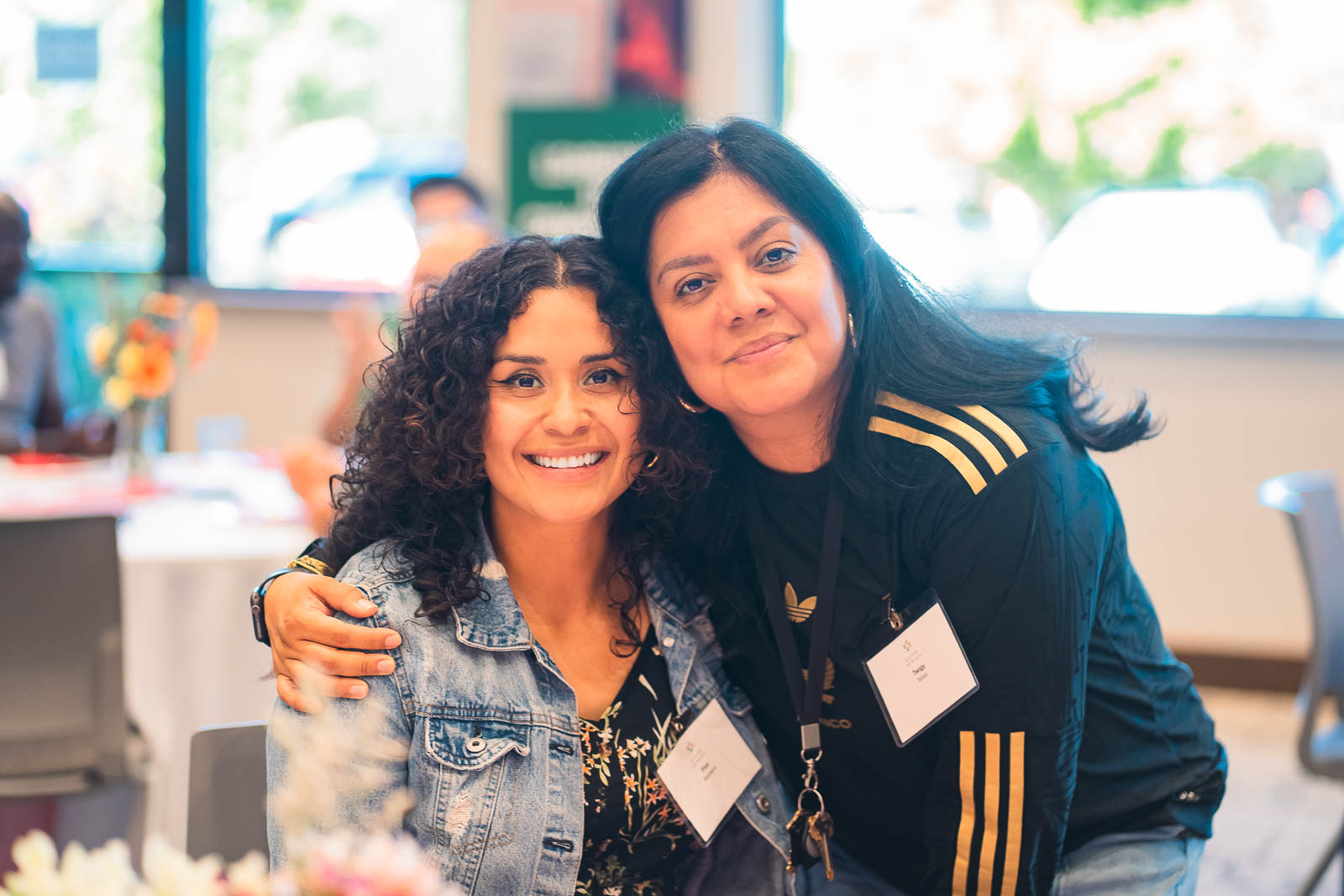
Pasco, WA — The June Community of Servant-Leaders Gathering brought together more than 40 alumni of the Institute for Servant-Leaders (ISL) for an evening of fellowship, story sharing, and reflection. Centered around Planting the Seeds of Servant-Leadership, the evening invited us to consider the many ways servant-leadership continues to take root and bear fruit long after the course ends.
Rick Griffin, founder of Neuro Leadership Academy and an ISL alumnus, shared a poignant story of how servant-leadership has shaped both his life and his calling.
"For years I believed my life would always revolve around forming servant-leaders," Rick shared. As director of Jubilee Leadership Academy, he walked alongside young men facing broken relationships and difficult circumstances, living out servant-leadership every day.
"Then we made the decision to close Jubilee."
Suddenly, Rick found himself at an unexpected crossroads. He could pursue the future he had envisioned or serve his wife in her desire to return home to Phoenix.
"How can I call myself a servant first," he remembered thinking, "if I'm insisting on my own way?"
"How can I call myself a servant first if I'm insisting on my own way?"
Although it was not the path he had planned, Rick discovered that serving first sometimes means surrendering our own plans so someone else can flourish.
In this new season, he wondered whether his servant-leadership journey had ended. Instead, God opened another door. Drawing on his neuroscience background and trauma-informed experience, Rick began helping organizations understand the brain, trauma, and behavior, teaching the same servant-leadership principles through a new lens.
"I realized there are a lot of people dying from the cold within."
Drawing from James Patrick Kinney's poem The Cold Within, which he used to pen his talk, Rick reminded us that the six people around the fire did not die because they lacked firewood. They died because fear, prejudice, resentment, and self-interest kept them from sharing what they had.
He explained that our brains interpret every interaction through the lens of past experiences. As we begin to understand this, we become slower to judge and quicker to extend compassion. We stop asking, "What's wrong with this person?" and begin asking, "What has this person experienced?"
"Our brains are not only designed to recognize threats," Rick said, "they are also designed to pursue community."
That pursuit of community lies at the heart of servant-leadership. God created us for relationship. When we understand one another's stories, we begin replacing fear with empathy, isolation with connection, and suspicion with trust.
"Our brains are not only designed to recognize threats, they are also designed to pursue community."
Rick concluded by reminding us that servant-leadership is much larger than a title or profession. Whether serving our families, coworkers, neighbors, or communities, every interaction becomes an opportunity to plant seeds that may one day bear fruit.
"If servant-leadership is truly inside you," he reminded us, "it's going to come out somewhere. Hopefully everywhere."
As servant-leaders, may we be people who radiate warmth into a world too often marked by the cold within, showing up with kindness and care in the places God has put us.